For a long time, Outside School Hours Care has been treated as an add-on. An extra module. A feature you switch on inside a platform that was really built for long day care.
It’s easy to see how that happened. Many providers run both OSHC and centre-based services, so it made commercial sense for software vendors to extend one system to cover both. But OSHC isn’t a smaller, simpler version of long day care. It’s a different operating model with its own pressure points — and when the software doesn’t understand that, the gap shows up in the places providers can least afford it: at the front desk during peak vacation care bookings, in the finance team reconciling casual attendance, and in the inbox where families are asking why an excursion surcharge didn’t apply correctly.
The mismatch is structural, not cosmetic
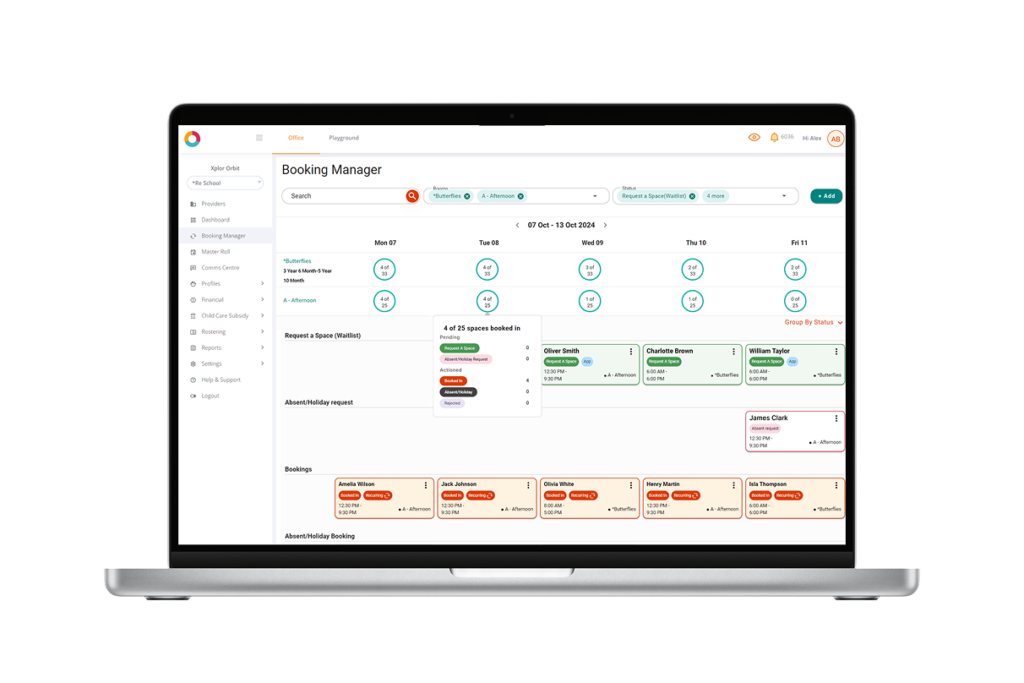
Long day care runs on enrolment. Families sign up, attendance is relatively predictable, and bookings change infrequently. OSHC runs on booking behaviour that shifts week to week and spikes hard around vacation care and pupil-free days. Families book multiple children across before-school, after-school and holiday programs, often with different patterns for each. Rooms and ratios need to flex around school terms, not calendar quarters. Casual bookings sit alongside routine ones and need to be priced, surcharged and reconciled differently.
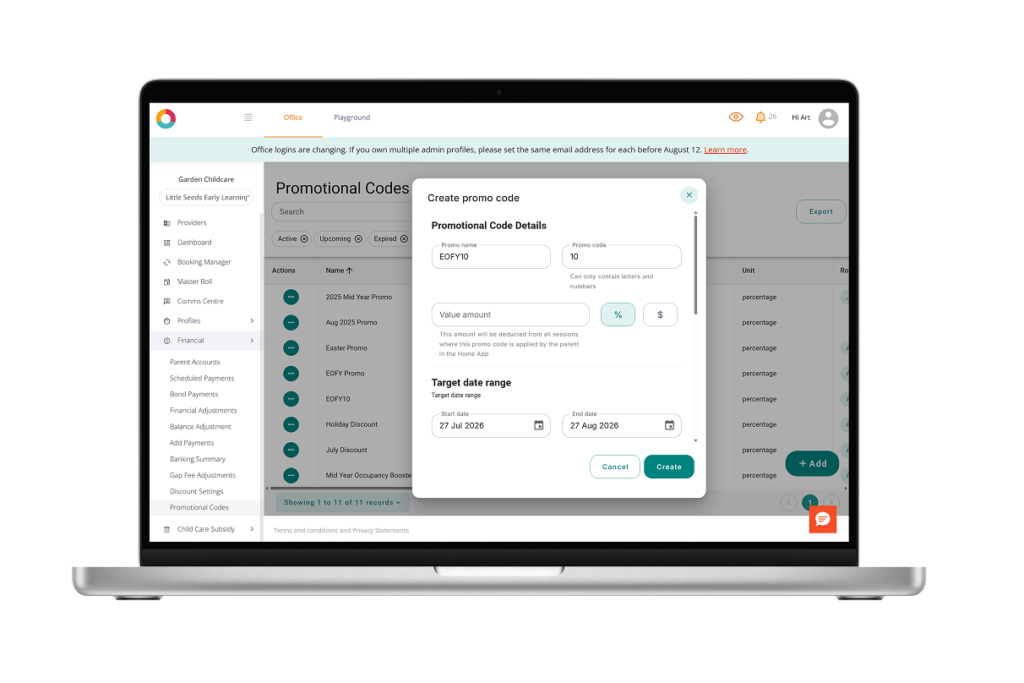
When a platform is designed first for long day care and OSHC is layered on top, providers usually find the basics work but the edges don’t. Multi-child bookings that should take one action take five. Promo codes for early-bird vacation care bookings don’t exist, or exist but don’t talk to the finance module properly. Excursion and incursion surcharges have to be applied manually because the system wasn’t built to expect that kind of variable, term-based pricing. None of these gaps are dealbreakers on their own. Together, they add hours of manual work to every single week of the school term — hours that come straight out of the time coordinators should be spending on children and families, not admin.
What “purpose-built” actually needs to mean
It’s become common in this sector for vendors to describe their OSHC offering as purpose-built. That word only means something if it shows up in the workflow, not just the marketing. For providers evaluating software, the practical test is simple: does the platform behave differently for OSHC than it does for long day care, in the places where OSHC behaves differently in real life?
That means express booking flows that let a family book multiple children into multiple programs in one action, not one form per child. It means room and program attributes that flex around school terms and pupil-free days, not a static room list borrowed from a long day care build. It means casual and routine bookings living in the same system without one of them being treated as an exception. And it means surcharge and promo logic that’s built into the booking flow itself, so coordinators aren’t reconciling spreadsheets on the side to make the numbers match what families were actually charged.
Compliance matters here too. CCS, government reporting obligations and the National Quality Framework don’t pause for OSHC’s different rhythm — a platform genuinely built for the sector accounts for that from the ground up, rather than requiring workarounds.
Support is a signal, not a substitute
There’s an understandable temptation for vendors to lean on support and onboarding quality as the headline differentiator — great support during a migration matters enormously, and providers should absolutely expect it. But it’s worth providers asking a second question alongside “how good is your support”: why is strong support so central to the pitch? Sometimes it’s simply excellent service. Sometimes it’s compensating for a platform that needs a lot of hand-holding because the underlying workflows weren’t designed for OSHC’s complexity in the first place. Both can look similar from the outside. The way to tell them apart is to ask how much support is needed six months after go-live, once the novelty of onboarding has worn off and the software just needs to work on a busy Tuesday afternoon pick-up.

The bar providers should hold vendors to
OSHC providers are running complex, high-volume operations with thin margins and thinner administrative capacity. The software they choose should reduce that load, not just digitise it. That’s a genuinely different design brief to long day care software — and providers deserve a platform that was built to that brief from day one, rather than one that had OSHC bolted on once the market got big enough to notice.
The question worth asking any vendor isn’t whether they support OSHC. It’s whether their platform was built for it.

by Xplor Education Team
-
First published: 28 July 2026
Written by: sallitrump