For years, technology adoption in early childhood education was framed as a matter of competitive advantage. Services who digitised their enrolments, communications, and compliance documentation were ahead of the curve. Those who hadn’t were slower — but not out of step with the law.
That has changed.
With the National Early Childhood Worker Register now live, and broader child safety reforms reshaping regulatory expectations, digital systems are no longer optional tools sitting alongside compliance processes. They are part of the compliance infrastructure itself. The platforms services use — and how well those platforms are built — now directly affect their ability to meet their legal obligations.
What the Worker Register Actually Requires
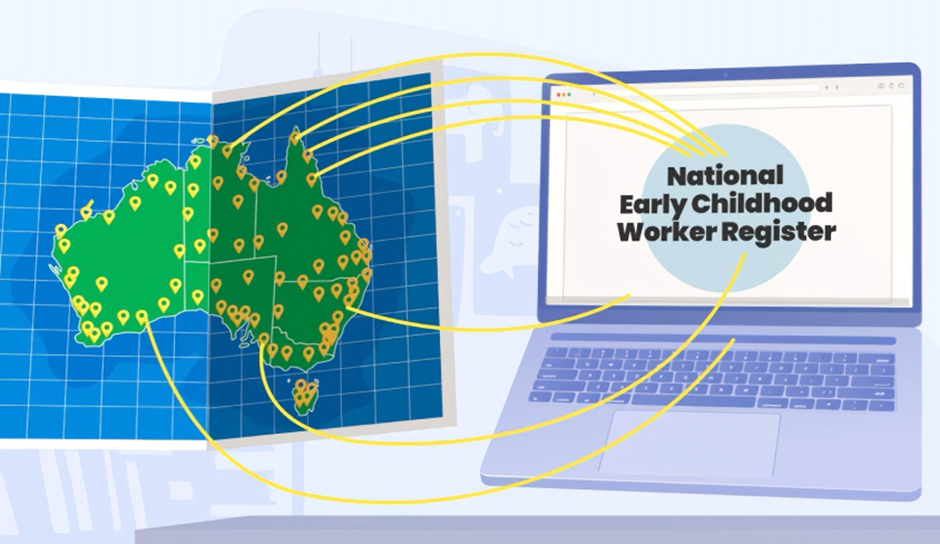
The National Early Childhood Worker Register, which became mandatory on 27 February 2026, requires approved services to enter and maintain accurate workforce information for every person working or volunteering at their services — through the National Quality Agenda IT System.
The scope is broad: educators, teachers, volunteers, students on placement, non-educator staff, and contractors. The timeframes are tight: any change must be updated within 14 days of the service becoming aware of it. And the stakes are real — the Register gives regulatory authorities a national view of who is working in education and care services and where, enabling them to identify risks and act on concerns across jurisdictional lines.
For enterprise operators running 50, 100, or 200 services, the question is not whether to comply. It is whether their systems and governance structures are capable of maintaining that standard of accuracy, consistently, across their entire network.
The Governance Gap at Scale
The Worker Register did not create new compliance obligations so much as it made existing ones visible — and verifiable — at a national level. Workforce data previously held in local files and spreadsheets is now in a centralised, government-managed system, accessible to regulators everywhere. This changes the risk profile of inaccurate or incomplete data fundamentally.
“The Worker Register is a signal of where the sector is heading,” says Will Athanasakis, Director of Product at Xplor Education. “Regulatory compliance is becoming a real-time, data-driven discipline. Services managing workforce records manually — or across disconnected systems — are going to find it increasingly difficult to maintain the accuracy and timeliness the new framework demands. The platforms you use need to be built for that.”

Where Xplor Education’s Platform Fits
Xplor Education’s suite of products is built around exactly this operational reality.
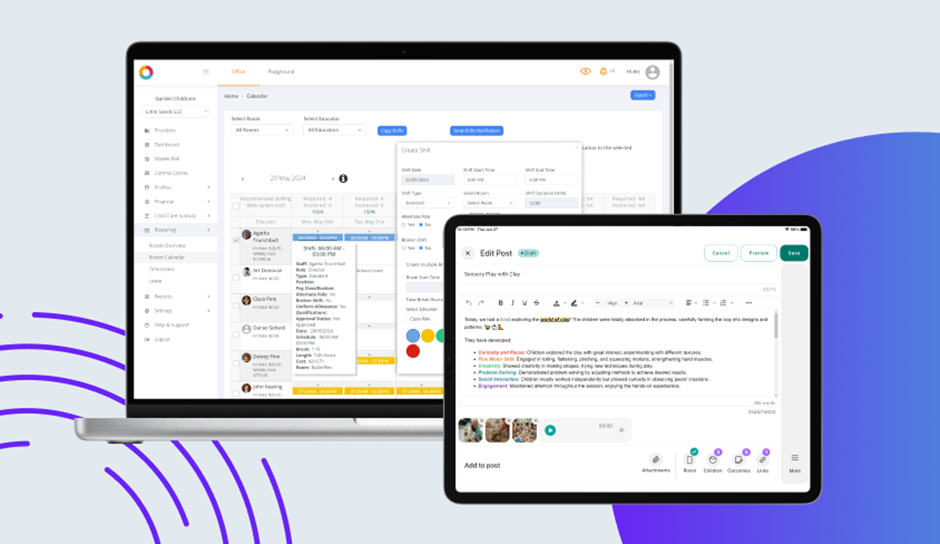
Office, a trusted childcare management software used by services across Australia, handles end-to-end service administration: enrolments, digital attendance, CCS subsidy management, rostering, incident reporting, and compliance documentation. For enterprise groups, Office provides centralised visibility across all services — with governance parameters set at the group level and compliance exceptions surfaced in real time.
For the Worker Register specifically, Office holds the workforce data services need to meet the Register’s requirements — but services remain responsible for entering and maintaining that information directly in the NQA IT System within the required 14-day timeframe.
Playground, Xplor’s educator-facing platform, is where compliance evidence is generated at the point of care. Every health event, observation, incident, and safety check is timestamped, attributable, and stored. The same capabilities that support enterprise groups are equally valuable for single-service and small-group operators. For a standalone service or a provider running two or three centres, the challenge isn’t governance at scale — it’s time. Maintaining accurate workforce records, producing compliance documentation on demand, and keeping up with regulatory changes is a significant administrative burden when you don’t have a dedicated compliance team.
Xplor’s platform reduces that burden by making compliance a byproduct of everyday operations, not a separate workload — freeing directors and educators to focus on children and families rather than paperwork.
Compliance by Design: What It Actually Means
In the context of what Xplor has built, compliance by design means three things in practice.
Compliance is embedded, not bolted on. When an educator records an incident in Playground, the form structure, required fields, and notification workflows are all built to meet regulatory requirements. While the educator must be familiar with the regulations — our tools make it simple for them to complete the record and ensure they meet the standard.
Governance is built into the platform rather than sitting with individuals. Services using Office can define key compliance and operational settings — such as qualification ratios, incident reporting timeframes, and documentation requirements — at the service or group level. Teams then operate confidently within those settings, supporting consistent compliance, while allowing educators and leaders to focus on day to day delivery — without the risk of unintentionally falling outside requirements.
The Platform Selection Imperative
For early learning services reviewing their technology stack, the question is whether their platform supports their scale and structure, while capturing workforce and compliance data in a way that aligns with regulatory requirements — without creating additional manual processes.
“What we’ve built at Xplor is a platform that treats compliance as a first principle, not an afterthought,” says Athanasakis. “More than 9,000 services in Australia and New Zealand trust us with the operational and compliance core of their business. That trust drives us to keep building ahead of where the regulatory environment is going.”
Catholic Early EdCare, operating more than 130 services nationally, is among those who have made that choice — saving up to 40 hours a month in administrative overhead while maintaining the compliance standards their scale demands.

The Worker Register is not the end point. It is the beginning of a broader digitalisation of regulatory infrastructure across the sector. Services who build on platforms designed for compliance at scale will be positioned to meet what comes next. Those who don’t will find it increasingly difficult to keep up — not because the obligations are unreasonable, but because their systems were never built to carry them. Digital readiness was once a competitive advantage.
It is now a regulatory requirement.

by Xplor Education Team
-
First published: 07 May 2026
Written by: sallitrump